
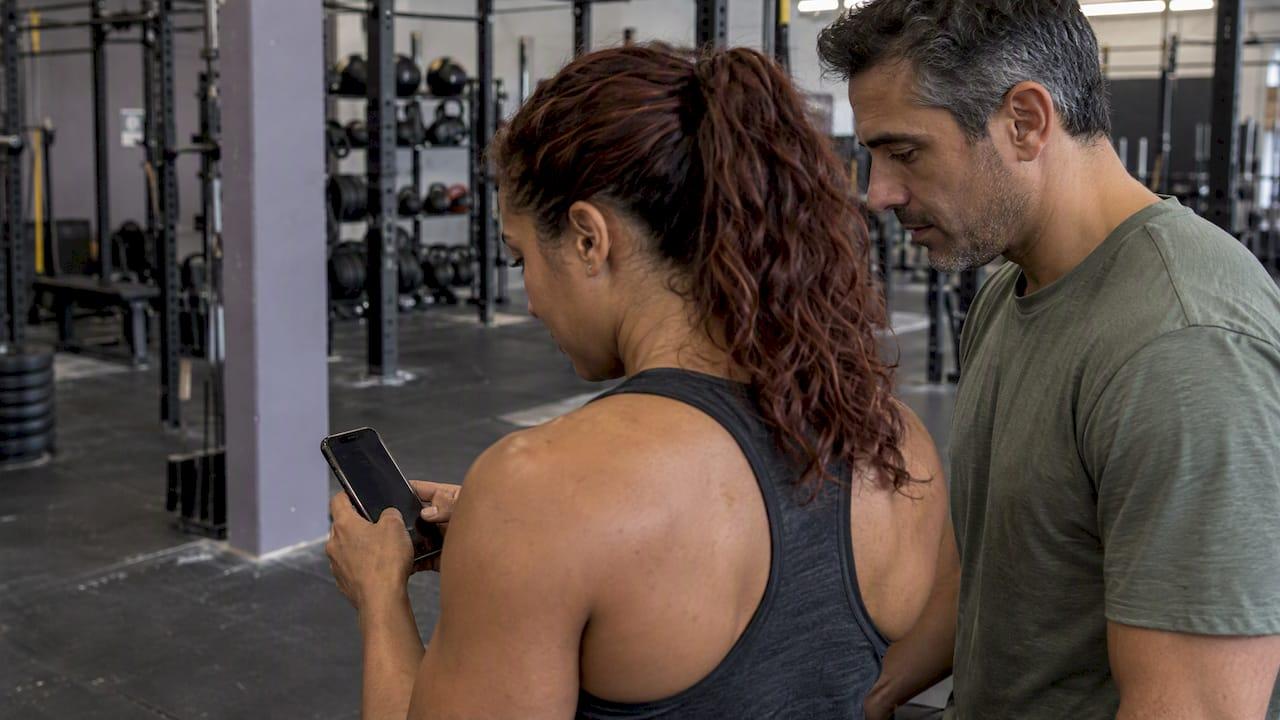
A performance history is the saved record of every session an athlete has completed. Its benefits are simple: athletes see proof of progress, coaches make better programming decisions, and gym owners spot disengaged members earlier. The record only pays off when it is complete, easy to read and collected without manual data entry.
This guide covers what a performance history contains, what each group gets from it, how it supports retention, and how to collect and protect the data responsibly.
TL;DR
- A performance history is the dated record of sessions, exercises, loads, reps and notes. It becomes more useful with benchmark scores and heart rate data added.
- Athletes use it to see trends, set goals and stay motivated. Coaches use it to refine programming and notice who needs support or recovery.
- Owners use it to power milestones and outreach that support retention. Published figures from other fitness operators show the effect can be meaningful.
- Get consent before tracking wearable data, and keep your interpretation inside the coaching scope.
- The easiest history to keep is the one nobody has to type in: automatic scoring and wearable data beat spreadsheets.
Table of Contents
- What performance history means in a gym
- Benefits for athletes
- Benefits for coaches
- Benefits for gym owners
- Use the data: from record to decision
- Collecting performance data without the paperwork
- Consent, accuracy and privacy
- What to look for in software
- Perspective: why we built history into the gym software
- Put it in practice with VO2WOD
- FAQ
- Sources
What performance history means in a gym
In training software, a performance history is the chronological record of completed sessions. It typically holds the date, the exercises, sets, repetitions, loads and any saved notes.
In a functional fitness gym, the definition stretches a little further because so much of the training is scored. A useful history there usually includes:
- Workout scores: time, rounds and reps, or load, depending on the format.
- Benchmark results: the repeatable tests an athlete returns to every few months.
- Personal records: the best lift or score per movement, with the date it happened.
- Effort data: heart rate during class, where the athlete opts in.
- Attendance: which classes and how often.
- Coach notes: scaling choices, movement faults, injuries and goals.
A single score tells you how one day went. A history tells you what direction the athlete is moving in. That difference is where every benefit below comes from.
Benefits for athletes
Visible progress
Most people underestimate how far they have come, because the change happens a few percent at a time. A training log lets an athlete visualize consistency and review trends instead of relying on memory. When a member can see that the lift they struggled with in spring is now a warm-up weight, they stop wondering whether the membership is worth it.
Charts make this especially clear. CrossFit's coaching resources describe graphs that show a member's max deadlift across 12 months or benchmark results over several months or years. That is the kind of picture a spreadsheet buried in a drawer never gives an athlete.
Better goals
A goal like "get stronger" is hard to act on. A goal like "add 10 pounds to my back squat by the end of the cycle" is easy to act on, but only if you know your current number and how fast it has been moving. History supplies both. The same log helps athletes set goals and build motivation because the next target is anchored to real past performance.
Smarter benchmark retesting
Benchmarks are only meaningful when you can compare today's score with the last attempt under the same conditions. Recording the scaling, the date and how the session felt makes the comparison honest. Our guide to benchmark workout tracking walks through how to log, compare and use those scores.
Motivation on flat weeks
Every athlete has stretches where numbers stall. A long history reframes a flat month inside a rising year. It also makes small wins visible: a first rep at a new load, a faster time on a familiar workout, a streak of consistent weeks.
Benefits for coaches
Programming grounded in data
Coaches who can see member efforts can refine programming, spot trends in strength or endurance, and identify when someone needs extra support or recovery. Without a history, a coach relies on what they remember about each person, which gets harder as class sizes and rosters grow.
Personalization inside a group class
Functional fitness is group training, and the challenge is making a shared workout fit individuals. A coach who knows an athlete's recent loads, scaling and effort can suggest the right weight before the clock starts. A coach who is guessing tends to default to the same advice for everyone.

Catching overreaching early
A history can show the pattern that precedes trouble: scores slipping across several sessions, effort staying high while output drops, or sudden gaps in attendance. Spotting those patterns lets a coach recommend recovery or a scaled week before the athlete gets hurt or quits. This is a coaching conversation, not a diagnosis, and anything that sounds medical belongs with a qualified professional.
Effort, not just output
Scores favor the strongest or fittest in the room. Heart rate shows how hard each person worked relative to themselves, which gives newer athletes credit they would otherwise never see. If you want a place to start, our post on athlete effort tracking covers three metrics coaches can begin using this week. For the hardware question, see how chest straps and watches compare for heart rate.
More capacity per coach
Technology that centralizes tracking also frees coach time. In one reported example, a personal training app helped Anytime Fitness coaches grow from roughly 40 to 45 clients up to 60 by segmenting client needs and building workouts outside of sessions. That example comes from one-on-one training rather than group classes, but the principle carries over: when the record is organized, less time goes to chasing information.
Better feedback conversations
Performance history gives feedback something to point at. "Your squat depth has been improving since January" lands better than a general compliment. See our write-up on coach feedback tracking for ways to keep those notes consistent across a coaching team.
Benefits for gym owners
Retention signals you can act on
Owners rarely lose members suddenly. Activity fades first: fewer classes, flatter scores, skipped benchmarks. A history makes that fade visible. Predictive tools in fitness apps are described as able to identify members who may be thinking about canceling, so coaches can reach out with timely, personal support. You do not need advanced analytics to start, though. A weekly list of members whose attendance dropped is already useful, and a short human message from a coach goes a long way. A sports management app on data practices is worth a read before you build any outreach on top of member data, since that outreach should stay inside what members agreed to.
Milestones that members feel
History is the raw material for celebration: a 10th visit, a 90-day streak, a first bodyweight pull-up, a new PR. Gymnation, a gym operator in the UAE, reported that members who received personalized progress round-ups had 10.5% higher lifetime value and almost no drop in visit frequency over a six-month study, compared with a 16.8% drop among members who did not receive them. The same coverage cites automated milestone celebrations, such as a 10th visit or 90-day streak, as able to lift 12-month retention by 15% to 25% in fitness facilities. Those are results from other operators, not a promise for your gym, but they show why recognition built on real data is worth the effort.

If you want to set this up, our post on milestone notifications for gym owners explains how automated messages tie into check-ins.
A stronger community
Shared numbers create conversation. A whiteboard used to do this job. Today, a leaderboard, a live heart rate display on a screen, or a post celebrating a PR gives members something to talk about in the parking lot. Group effort data in particular can change how a class feels. Our guide on group heart rate training explains the rollout, and displaying heart rate on a TV covers the opt-in and coach-ready basics.
A story to tell prospects
When a prospect asks what makes your gym different, "we track your progress and show it to you" is concrete. Members who can export or show their history also tend to talk about it, which helps your reputation.
Use the data: from record to decision
A history that nobody reads is just storage. Four habits turn it into decisions.
- Review weekly. Spend 15 minutes looking at attendance drops, new PRs and anyone whose scores have slid.
- Pick one action per person. A message, a scaling suggestion, a recovery week or a congratulation.
- Retest on schedule. Repeat benchmarks at consistent intervals so comparisons mean something.
- Close the loop. Tell members what you noticed. Nothing builds trust like "I saw your trend and here is what I suggest."
The partner of good data is good judgment. A coach who understands what a number can and cannot say is more useful than a dashboard.
Collecting performance data without the paperwork
The biggest obstacle to a complete history is effort. If athletes must write every score on a whiteboard and then retype it, gaps appear, and gaps ruin trends.
Three approaches reduce that friction:
- Automatic scoring that captures results from the workout itself.
- Wearable integration so heart rate and activity flow in without extra steps. The ACSM's 2024 survey placed wearable technology first among fitness trends, and noted that professionals can use wearables to track a client's heart rate or steps. Our article on integrating wearables at your gym describes a rollout of two to six weeks without a custom build, and the Fitbit gym integration guide covers one popular device.
- Check-in capture by QR code or wristband, so attendance is recorded automatically.
If you want live heart rate in class, the heart rate display setup guide shows how to pair monitors and show live numbers.
Consent, accuracy and privacy
Performance data is personal. Treat it that way from the start.
Get members on board
Exercise professionals should make sure clients are comfortable with wearable tracking and avoid crossing into medical practice unless they are qualified. In practice, that means:
- Make heart rate display opt-in, and make it easy to opt out.
- Explain what you collect, who sees it and how long you keep it.
- Do not use heart rate numbers to diagnose or treat anything. If a member mentions chest pain, dizziness or a heart condition, refer them to their physician.
Know what the numbers mean
Devices differ in accuracy, and a coach should know the limits. A guide to wearable heart rate accuracy explains what a typical bias figure means in practice. Use heart rate as a trend and effort guide, not a precise clinical measurement.
Protect the record
Limit who can view individual histories, avoid posting member data publicly without permission, and ask any software vendor how data is stored and how a member can request deletion. A history is a member's property in spirit, so treat requests to see or remove it seriously.
What to look for in software
When you evaluate any system for keeping performance history, check:
| Question | Why it matters |
|---|---|
| Does it score workouts automatically? | Manual entry creates gaps. |
| Does it keep benchmarks and PRs in one place? | Comparisons need consistent records. |
| Can it take heart rate from common wearables? | Effort data is more useful than scores alone. |
| Does it connect history to messaging and milestones? | Data should lead to action. |
| Can it import your existing records? | Years of history should not be lost when you switch. |
| Is consent built into heart rate display? | Opt-in protects members and your reputation. |
That last row about moving your records matters more than owners expect. A history only becomes powerful after months of data, so starting from zero is a real cost.
Perspective: why we built history into the gym software
We built VO2WOD for functional fitness gyms because we kept seeing the same pattern: great coaching, scattered data. Scores lived on a whiteboard, attendance in one tool, billing in another and heart rate in an app the coach never saw.
Our view is that performance history should not be a separate project. It should be a byproduct of normal class. When automatic scoring, check-in and wearable heart rate all feed one record, coaches get insight into member effort without data entry, and athletes get a timeline they can be proud of.
We also think history belongs in the retention conversation. A milestone message that references a real PR means more than a generic "we miss you" email. That is why we connect performance tracking with in-app messaging and milestones, and why we offer free data migration, so your existing records come along instead of starting over.
The goal is not more dashboards. It is a coach who knows what to say to each athlete at the right time.
Marcus
Put it in practice with VO2WOD
VO2WOD is management software built for functional fitness gyms. It combines live in-class heart rate monitoring, automatic workout scoring, a movement library with personal record tracking, class scheduling, memberships and recurring billing, QR or wristband check-in, a lead CRM and in-app messaging with milestones. It works with Garmin, Apple, Fitbit and Samsung wearables.
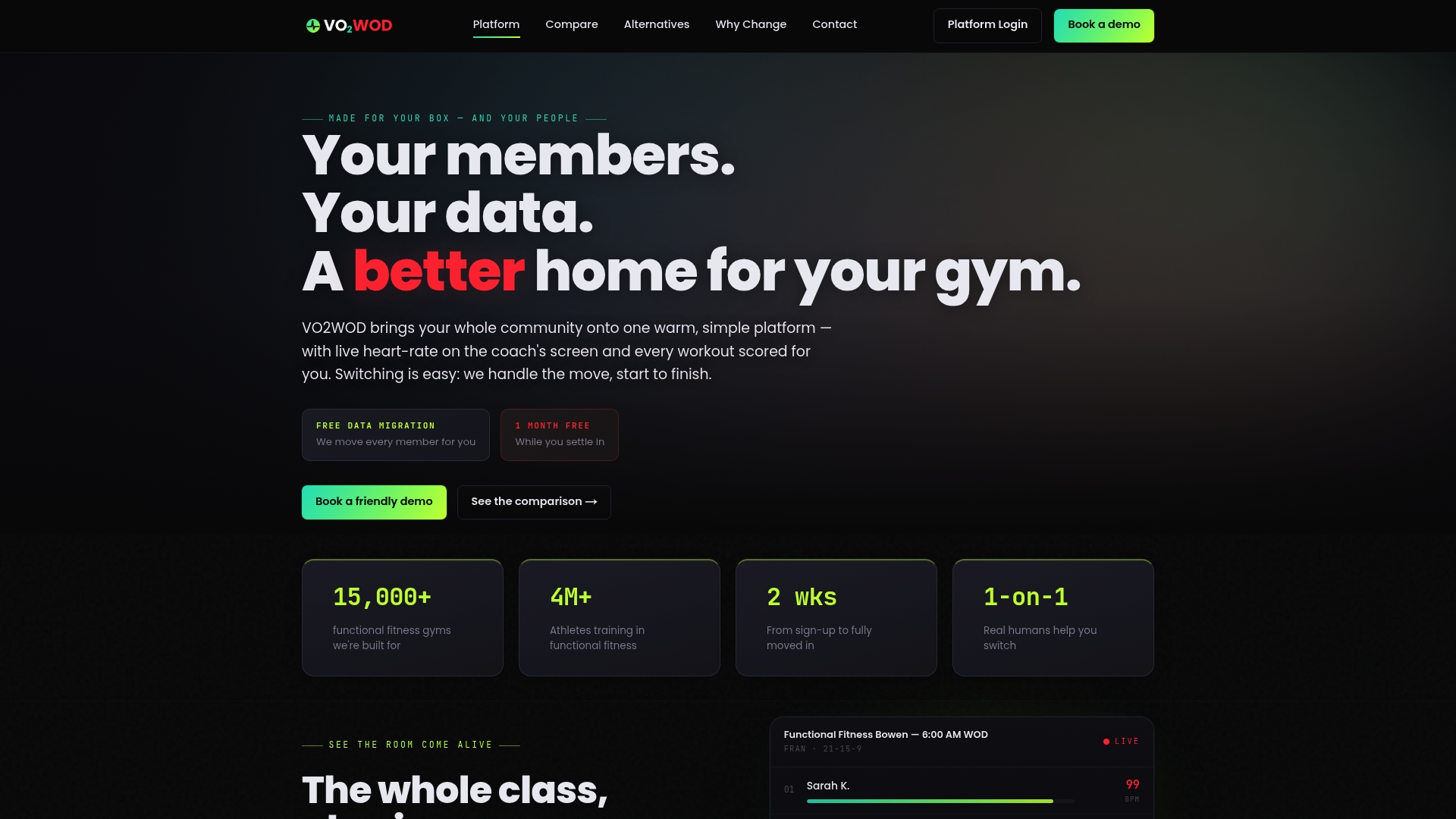
Switching is designed to be low effort: we offer free data migration, one month of complimentary service and a dedicated support team to help you move. If you run a gym and want to see how a complete performance history looks in your own classes, explore VO2WOD. To see in-class group fitness hardware, look at Vo2hub, or review how we stack up against other approaches on our alternatives page.
FAQ
What is the main benefit of keeping a performance history?
It turns individual workouts into a visible trend. Athletes can see progress and set realistic goals, while coaches can spot patterns in strength, endurance and recovery. For gym owners, the same record supports better retention efforts.
How long should a gym keep member performance data?
Keep it as long as the member is active and has agreed to it, because the value of a history grows with time. Set a clear policy for deleting or exporting records when someone leaves, and tell members what it is. If you have legal questions, ask a qualified attorney familiar with your state.
Can performance history help reduce member cancellations?
It can help you notice disengagement earlier and personalize your response. Operators have reported gains from milestone recognition and at-risk outreach, but results vary by gym. The history gives you the signal, and a coach's personal message is what usually makes the difference.
Do athletes need a wearable for a useful history?
No. Dates, scores, loads, benchmarks and notes already make a strong record. A wearable adds effort data, which helps coaches understand how hard a member worked, and it should always be optional.
Sources
- Workout history, Alpha Progression glossary
- The Power of a Training Log, TrainingPeaks
- Unlock the Power of Data, CrossFit
- Anytime Fitness Drives Revenue With Personal Training Tech, Athletech News
- Gymnation and member progress celebrations, Leisure Opportunities
- Fitness Trends 2024, ACSM
- Wearable heart rate accuracy