
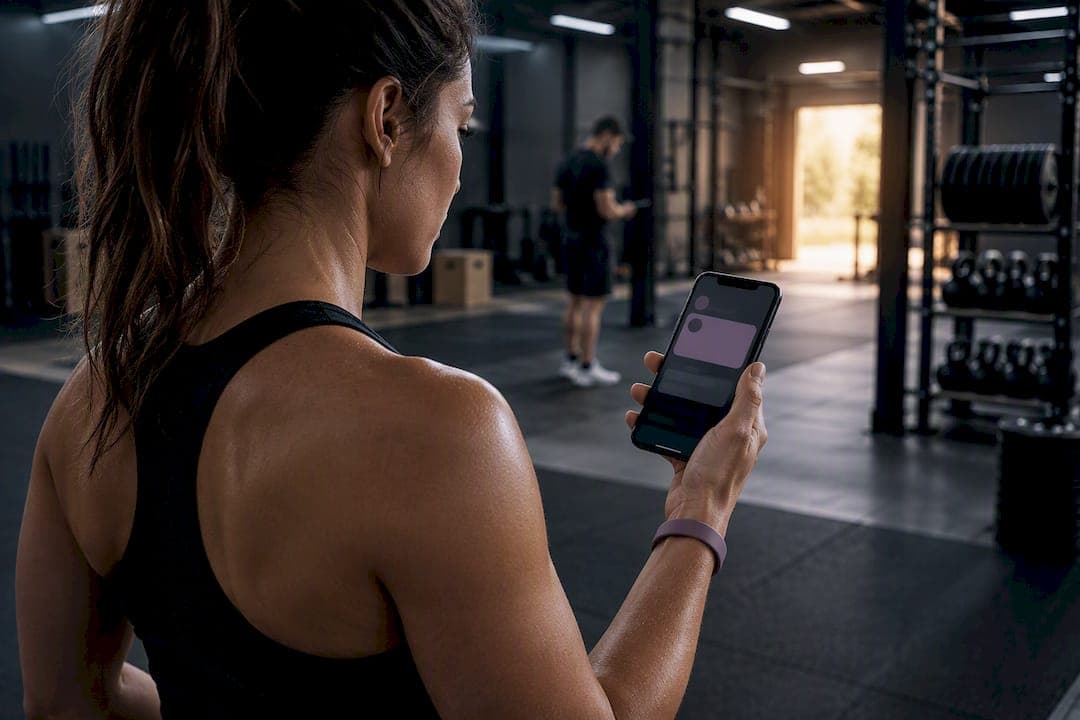
Automated milestone notifications, sent when members hit attendance counts, personal records, or membership anniversaries, raise engagement and retention when they are personalized, social first, and tracked against real numbers. Gyms typically deliver them through email, push, SMS, and in-app messaging, triggered by check-ins, logged PRs, or renewal dates. A gym management platform can automate these workflows so staff never have to send them by hand.
TL;DR:
- Milestone notifications can increase attendance check-ins by up to 27% when personalized and delivered through the preferred channel.
- Different milestones—such as check-in counts, personal records, or membership anniversaries—should use tailored messaging channels to optimize response and avoid member muting.
- Automating milestone triggers based on real data points like check-ins, workout scores, or renewal dates streamlines workflows and prevents manual tracking burnout.
- Personalization tokens, short celebratory messages, and share prompts boost engagement without overwhelming members with frequent notifications.
- SMS marketing requires explicit, category-specific consent, with clear opt-outs and separate recording for transactional versus promotional messages.
Table of Contents
- Why milestone notifications matter for retention and membership value
- Common milestone types and which channel to use for each
- Automation triggers and workflow examples
- Message content that feels personal and drives action
- Legal and consent essentials for SMS and automated messaging
- Measuring impact: KPIs and simple tests
- Implementation checklist and where a platform fits in
- Why recognition beats one-off promotions
- Run your milestone program without the manual work
- Sources
- FAQ
Why milestone notifications matter for retention and membership value
Cash rewards get attention, but recognition and social proof tend to build habits that last. The BCFG and 24 Hour Fitness StepUp program tested 53 behavior-change strategies across more than 60,000 members and found that planning prompts, pre-workout text reminders, and small incentives increased check-ins, with some combinations producing a 9% to 27% boost depending on the variant. Milestone messages work on the same principle: they turn a private habit into a shared accomplishment.
Operator data backs this up. Gymnation's Spotify-style progress summaries, called Round-Ups, produced roughly 10.5% higher lifetime value for recipients compared to a control group, along with a smaller drop in visit frequency over six months.
A 9% to 27% increase in check-ins was recorded across strategy combinations in the BCFG/24 Hour Fitness behavior study, showing that reminder and recognition tactics move real attendance numbers, not just sentiment.

Common milestone types and which channel to use for each
Not every milestone deserves the same channel or the same urgency. Match the message to the moment, and keep frequency low enough that members do not start ignoring your notifications.
- First check-in: welcome push or in-app message, sent within minutes to reinforce the decision to show up.
- Milestone check-in counts (10, 50, 100): in-app badge plus a short email summarizing the streak.
- Personal records: instant push notification with a share prompt, sent the moment the PR is logged.
- Attendance streaks: in-app or push reminder, timed to land right after the qualifying visit.
- Membership anniversaries: email with a short recap of visits and progress over the year.
- Challenge completions: in-app celebration message plus an optional email recap for the group.
- Birthdays: email or SMS, kept light and separate from any promotional content.
- Renewal dates approaching: SMS with a direct link, since urgency and open rates matter most here.
A member who gets a push for every single check-in will mute your app within a week. Reserve immediate channels for genuine wins and save email for round-ups and summaries.
Automation triggers and workflow examples
Milestone programs run on events, not calendars. A trigger fires when a data point crosses a threshold: a check-in counter hits 100, a personal record gets logged, a membership status changes to "renewal due."
Three workflows cover most of what a gym needs:
- 100th check-in triggers an in-app badge plus a follow-up email recapping the member's attendance history.
- PR logged triggers an instant push notification with a one-tap share prompt for social platforms.
- Renewal due in 7 days triggers an SMS with a direct renewal link and a short thank-you note.
Each workflow needs specific data available in the system: check-in history, personal-record fields tied to individual members, billing status hooks for renewal dates, and, where available, wearable sync data for streak or heart rate based milestones.
Pro Tip: Start with one trigger, the 100th check-in or the first PR, before building out a full milestone catalog. A single working workflow teaches you more about member response than five untested ones.
Message content that feels personal and drives action
A milestone message should read like it came from a coach who noticed, not a system that fired an event. Keep it short, name the specific stat, and give the member exactly one thing to do next.
- PR message: "Nice work, [first name]. That's a new PR on back squat at [stat]. Tap to share it with the team."
- Check-in milestone: "That's check-in number 100, [first name]. [Trainer name] wanted you to know the whole gym noticed."
- Anniversary message: "One year in. You've logged [stat] visits since you joined. Here's a recap of your year."
Personalization tokens (first name, the specific stat, the trainer's name) matter more than design polish. Tone should stay celebratory and peer-focused rather than transactional. Save incentives, such as a free class pack, for milestones that mark real commitment, like a one-year anniversary, rather than attaching a discount code to every notification.
Pro Tip: Add a one-tap share button that pre-fills a caption with the member's stat. It costs nothing and turns a private win into free marketing.
Legal and consent essentials for SMS and automated messaging
Text messaging carries real regulatory weight in the United States, and the rules tightened in recent updates. The FCC's Second Report and Order requires one-to-one prior express written consent for marketing texts and puts mandatory blocking rules in place for messages that violate consent requirements, with obligations that carriers and senders must both follow.
Practical safeguards for gym owners:
- Separate transactional consent (check-in confirmations, billing receipts) from marketing consent (promotional milestone offers) in your CRM.
- Record and store every consent with a timestamp and the specific message category it covers.
- Include a clear opt-out on every marketing text and honor it immediately.
- Default to in-app push or email for non-marketing milestone updates, reserving SMS for messages members expect and have consented to receive.
Consent must be one-to-one and topically tied to the interaction in which it was given, according to the FCC's tightened rules, which means a blanket signup form no longer covers every future text category.
Measuring impact: KPIs and simple tests
Milestone programs are worth running only if you can prove they move numbers. Track a small set of metrics consistently rather than a dashboard full of vanity stats.
- Visit frequency: weekly or monthly check-ins per member, compared before and after a milestone program starts.
- Renewal rate and retention cohorts: measured at 30, 90, and 180 days to catch both short-term bumps and long-term habit change.
- Reactivation rate: how many lapsed members return after a milestone-style nudge.
- Leading signals: open rates, click rates, share rates, and redemption of any micro-incentive attached to a message.
Run small A/B tests on one variable at a time, timing, channel, or tone, with a test group of 10 to 20% of members over a 30 to 90-day window before scaling a workflow gym-wide, an approach consistent with pilots run in the BCFG/24 Hour Fitness program.
Implementation checklist and where a platform fits in
Building a milestone program in the right order saves you from redoing work later.
- Define which milestones matter most for your member base first.
- Map the data sources you already have: check-in logs, PR fields, billing status, wearable feeds.
- Choose channels for each milestone type before writing a single message.
- Build two or three message templates and configure the triggers that fire them.
- Pilot with a small group, measure the KPIs above, then iterate before a full rollout.
A platform built for functional fitness gyms can cover most of this checklist natively. VO2WOD combines in-app milestone messaging, wearable integration across Garmin, Apple, Fitbit, and Samsung, automatic workout scoring, and QR or wristband check-in tracking, along with free data migration and onboarding support for gyms switching from another system.
Pro Tip: Map your milestone checklist to your existing software's trigger options before buying anything new. Half the friction in these programs comes from data that lives in three disconnected tools instead of one.
Why recognition beats one-off promotions
Most gyms default to discount codes when they want to boost engagement, but a discount fades the moment it expires. A milestone message that recognizes a real accomplishment keeps working because it taps into identity, not price sensitivity. If you have limited staff time, run a small recognition pilot, one milestone type, one channel, thirty days, before building anything bigger. Measure it, then decide what earns a permanent spot.
— Marcus
Run your milestone program without the manual work
Chasing check-in counts and PR logs by hand is how milestone programs quietly die after the first month. VO2WOD was built specifically for functional fitness gyms, so milestone triggers connect directly to the data you already track: heart rate monitoring during class, automatic workout scoring, and check-ins logged through QR or wristband.

| VO2WOD feature | Milestone program task it covers |
|---|---|
| In-app messaging | Delivering badge and PR notifications instantly |
| Wearable integration (Garmin, Apple, Fitbit, Samsung) | Streak and heart rate based milestone triggers |
| Automatic workout scoring | PR detection without manual entry |
| QR/wristband check-in | Attendance counters for milestone thresholds |
| Free data migration and onboarding | Moving milestone history over from your current system |
Gyms evaluating a switch can also compare VO2WOD against other functional fitness gym software to see how the features line up. Start a pilot with VO2WOD and get free migration and onboarding support built in.
Sources
- BCFG and 24 Hour Fitness Behavior Change Study
- FCC Second Report and Order (Targeting and Eliminating Unlawful Text Messages) — FCC-23-107
- Has Gymnation found the secret to retention? Lifetime value increased — FitTechGlobal
FAQ
What are some common gym milestones to track?
Common milestones include first check-in, check-in counts like 10, 50, or 100 visits, personal records, attendance streaks, membership anniversaries, and challenge completions. Birthdays are often included too, though they are usually kept separate from performance-based milestones.
What is the 3/2/1 rule in the gym?
The 3/2/1 rule refers to a workout structuring method some coaches use to balance strength, conditioning, and mobility work across a session or week rather than a milestone or notification concept. Definitions vary by gym and coach, so check with your own trainer for the specific version they follow.
What makes a good gym caption for social sharing?
A good caption is short, specific, and includes a real number, such as a personal record or a check-in count, rather than a generic motivational line. Milestone messages that pre-fill a caption with the member's own stat tend to get shared more because the achievement feels personal rather than promotional.
What should gyms look for in a reminder or notification app?
Look for a platform that can trigger messages automatically from real data, such as check-ins, personal records, or membership status, rather than requiring manual scheduling. VO2WOD handles this natively for functional fitness gyms through in-app milestone messaging tied to check-in tracking and automatic workout scoring.
Are text message milestone alerts legal to send to gym members?
Marketing texts require prior express written consent under FCC rules, and that consent must be one-to-one and tied to the specific message category. Transactional messages, like renewal confirmations, carry different requirements than promotional content, so gyms should track consent separately for each.