

Use heart rate to track steady aerobic work over weeks and months, and use RPE to control intensity in real time, especially in heat, races, and short intervals where heart rate lags. Neither metric wins outright. Heart rate gives you objective, trackable data; RPE catches what a chest strap can't, like fatigue, stress, and heat. Runners who combine both make fewer pacing mistakes than those who trust either one alone.
TL;DR:
- Combining both heart rate and RPE provides a more accurate assessment of effort, especially during heat, racing, and short intervals where reliance on one alone can be misleading.
- Heart rate is most reliable for steady-state, long-term training, and recovery monitoring, but it struggles with rapid effort changes and environmental influences like heat and dehydration.
- RPE reacts instantly to effort and environmental factors, making it ideal for pacing during races, heat, and short intervals, but it requires calibration and experience to judge effort accurately.
- Beginners should pair RPE with heart rate early in training to improve perception accuracy, especially when managing efforts in variable conditions.
- Coaches prioritize RPE training because it improves with practice, offering an immediate, equipment-free cue for effort, while heart rate serves better for tracking long-term progress.
Table of Contents
- RPE vs Heart Rate: A Quick Comparison
- How Does the RPE Scale Work?
- How Does Heart Rate Track Effort, and Where Does It Fail?
- When Should You Trust RPE Over Heart Rate?
- When Should You Trust Heart Rate Over RPE?
- How Do You Combine RPE and Heart Rate in Training?
- How Do You Calibrate RPE Against Your Own Heart Rate?
- What Does the Research Actually Show?
- Why Coaches Still Teach RPE First
- Sources
RPE vs Heart Rate: A Quick Comparison
Heart rate is objective and easy to log automatically, but it drifts upward late in long runs and lags behind sudden effort changes. RPE reacts instantly and folds in things like sleep debt and humidity, but new runners often misjudge it until they've practiced.
- Heart rate strengths: consistent tracking, works overnight for resting HR trends, good for base building.
- Heart rate weaknesses: cardiac drift, slow response in intervals, thrown off by heat and caffeine.
- RPE strengths: instant feedback, accounts for fatigue and environment, no equipment needed.
- RPE weaknesses: subjective, requires calibration, easy to underestimate under adrenaline.
- Rough mapping: RPE 3 to 4 tracks with an easy aerobic heart rate zone; RPE 6 to 7 lines up with tempo or threshold effort; RPE 8 to 9 matches near-max interval work.
Watch for mismatches. If your heart rate reads low but your legs feel very fatigued, trust the feeling, not the number.
How Does the RPE Scale Work?
The Borg scale, developed for exercise physiology research, originally ran 6 to 20, a strange range meant to roughly track heart rate divided by 10. Most runners today use the simpler 1 to 10 RPE scale, where 1 is barely moving and 10 is an all-out sprint you couldn't sustain another ten seconds. Both versions measure the same thing: how hard the effort feels, integrating everything happening inside your body.
That's what makes RPE valuable and tricky at once. It reflects your cardiovascular strain, sure, but also your sleep, hydration, heat exposure, and mental stress on that particular day. Two runs at identical pace can produce completely different RPE scores depending on how beat up you are.
The catch is calibration. Beginners frequently misjudge their own exertion, rating hard efforts too low or easy efforts too high, according to the Cleveland Clinic's explanation of the RPE scale. A few habits fix that fast:
- Pair RPE with heart rate for the first several weeks of easy runs to build an internal reference.
- Rate your effort at consistent points in a run, not just at the finish.
- Review your RPE log against pace and heart rate monthly to spot drift in your own perception.
How Does Heart Rate Track Effort, and Where Does It Fail?
Heart rate rises roughly in proportion to workload during steady-state exercise, which is why it's the default metric on nearly every running watch. That relationship holds well during a controlled aerobic run. It gets shakier the moment your effort becomes irregular.
Sensor type matters more than most runners realize. Optical wrist sensors use light (PPG) to estimate pulse through skin, and they're convenient but prone to error during fast cadence changes or intense efforts, per an analysis of running by heart rate. Chest straps read electrical signals directly (similar to ECG) and stay more reliable when you need precision, particularly in intervals.
A 2017 study published in PMC found RPE and heart rate rise together across many types of exercise, but the two can diverge sharply during alternating-intensity work and longer sessions.
Three failure modes to know:
- Cardiac drift: heart rate creeps upward over a long run even when pace and effort stay flat, especially in heat.
- Lag: heart rate takes 30 to 90 seconds to catch up to a sudden change in intensity, which makes it nearly useless for controlling short intervals.
- Environmental noise: heat, dehydration, illness, and stimulants all push heart rate up independent of actual effort.
Pro Tip: If your heart rate reads unusually high on a run that feels normal, check hydration and sleep before assuming your fitness dropped.
When Should You Trust RPE Over Heart Rate?
Heart rate becomes the least reliable signal in exactly the situations where good decisions matter most.
- Racing. Heart rate can spike from adrenaline before the gun even fires, so pacing off RPE and feel keeps you honest in the first mile.
- Heat and humidity. Heart rate rises for the same pace as your body works to cool itself; RPE tells you how hard you're actually working.
- Long runs. Cardiac drift makes heart rate climb late in a run even at steady effort, per coaching analysis from CTS on ultra-endurance training.
- Travel and fatigue days. Poor sleep and jet lag can distort resting and exercise heart rate for days, but RPE adjusts on the spot.
- Short intervals. Heart rate lags too much to guide effort inside a 60 to 90 second repeat.
Pro Tip: New runners tend to underestimate hard efforts on the 1 to 10 scale. If you can't say a full sentence without pausing, you're at RPE 7 or higher, no matter what the number in your head says.
When Should You Trust Heart Rate Over RPE?
Heart rate earns its keep in longer-arc training decisions where day-to-day feel is too noisy to trust alone.
- Base building and Zone 2 work. Steady aerobic runs are exactly the scenario heart rate handles best, since effort and cardiovascular response stay closely linked.
- Long-term fitness tracking. A falling heart rate at the same pace over months is one of the clearest signs your aerobic engine is improving.
- Recovery monitoring. Resting heart rate and heart rate variability, tracked over weeks, flag overtraining or illness before you feel it.
To get clean data, use a chest strap for anything requiring precision and keep conditions consistent, meaning similar time of day, hydration, and terrain when comparing sessions.
Pro Tip: Log resting heart rate first thing every morning for two weeks before trusting any single day's reading. One number means nothing; the trend means everything.
How Do You Combine RPE and Heart Rate in Training?
Treat the two metrics as partners with different jobs, not competitors.
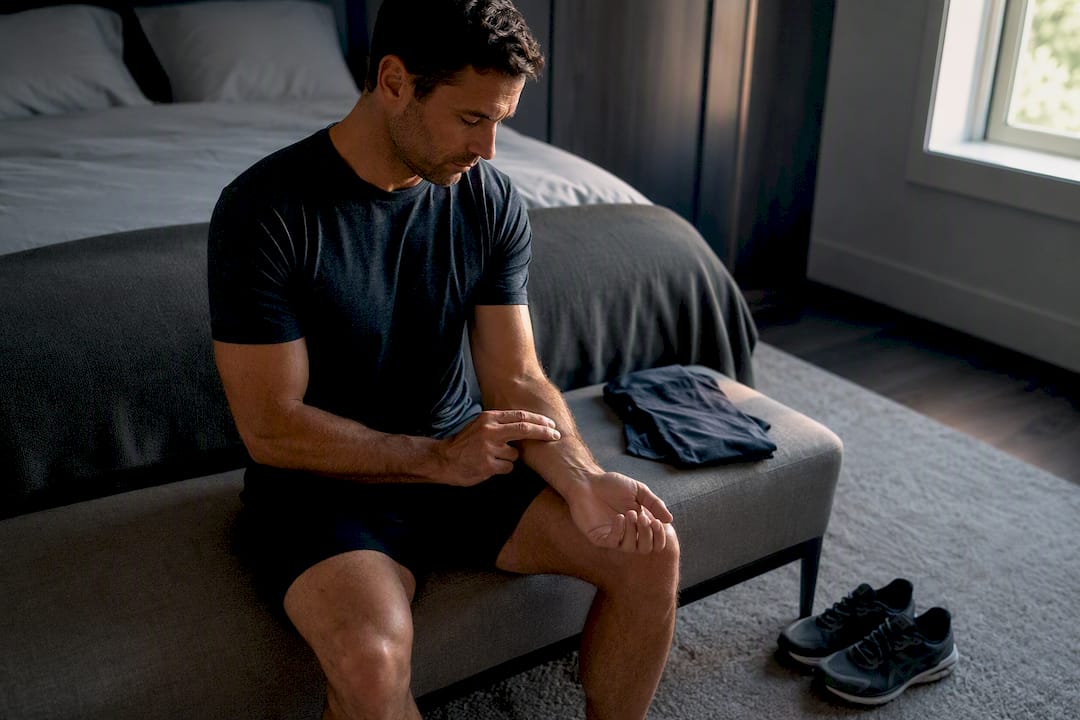
- Morning check. Before your run, note resting heart rate and a quick gut-check RPE for how you feel. A high resting heart rate paired with a rough RPE reading is a signal to ease off that day.
- Warm-up calibration. During your warm-up, compare your RPE at a given pace to the heart rate on your watch. If they don't match your usual pattern, trust RPE for that session.
- Assign a primary control by session type. Easy runs and long runs: heart rate leads. Tempo and threshold: RPE leads, heart rate confirms afterward. Intervals and races: RPE leads exclusively.
- Log session-RPE (sRPE). Multiply your average RPE by session duration in minutes. This single number, which correlates well with heart rate based training load in competitive cyclists, rolls into a simple weekly load tally you can track alongside heart rate data.
Pro Tip: Two similar sRPE numbers from very different sessions, say a short hard interval day and a long easy run, are a red flag that one of your RPE ratings is off.
How Do You Calibrate RPE Against Your Own Heart Rate?
Two simple tests reveal how your personal RPE tracks against your actual heart rate response.
- Steady-state mapping run. Warm up for 10 minutes, then run 20 minutes at a conversational, sustainable pace. Record your average heart rate and RPE from the final 10 minutes. Repeat monthly; a rising heart rate at the same RPE and pace often signals heat, fatigue, or illness rather than fitness loss.
- Threshold interval check. Run 3 repeats of 3 minutes at a hard, sustainable effort with equal rest. Note your RPE at 60 seconds into each repeat, then check heart rate at the end. You'll typically see heart rate still climbing after your RPE has already leveled off, which is the lag in action.
- Adjust from there. If RPE consistently reads high relative to heart rate, you may be undertrained for that intensity. If it reads low, you might be more fit than your current heart rate zones assume.
What Does the Research Actually Show?
The relationship between RPE and heart rate is real but loose enough that neither should work alone. Correlation coefficients between the two hover around 0.62 across studies, according to research summarized on RPE scale validity, meaning they track together but leave plenty of room for individual variation. That variation grows with alternating-intensity work and longer duration, which is exactly when the 2017 PMC research found the two measures diverge most.
Session-RPE has held up as a valid load-tracking tool in competitive endurance sport, correlating with heart rate based training impulse (TRIMP) in field settings among cyclists. But a 2024 study in PeerJ found that RPE-heart rate equations built from short incremental lab tests don't reliably transfer to prolonged steady-state runs. Lab-derived formulas and race-day physiology aren't the same animal.
- Moderate, not perfect, correlation between the two metrics across modalities.
- sRPE holds up well as an endurance load-tracking method.
- Lab-based prediction equations lose accuracy in the field over longer durations.
Why Coaches Still Teach RPE First
Coaches keep teaching RPE first because it works even when your watch dies, your strap slips, or your sensor reads garbage in the cold. Heart rate is a great long-term ledger. RPE is the skill that keeps you honest in the moment, and it's the one metric that improves the more you practice it, which most runners never do on purpose.
My honest take: build a habit of rating every run on the 1 to 10 scale before you even glance at your watch, then compare. Do that for a month and your RPE accuracy improves more than any gadget will. Use heart rate to confirm the trend. Use RPE to run the actual workout. Coaches and gym operators managing group training can layer real-time heart rate data on top of that habit using a platform like Vo2wod, which gives coaches live visibility into effort across a whole class without slowing anyone down with manual tracking.
— Marcus