
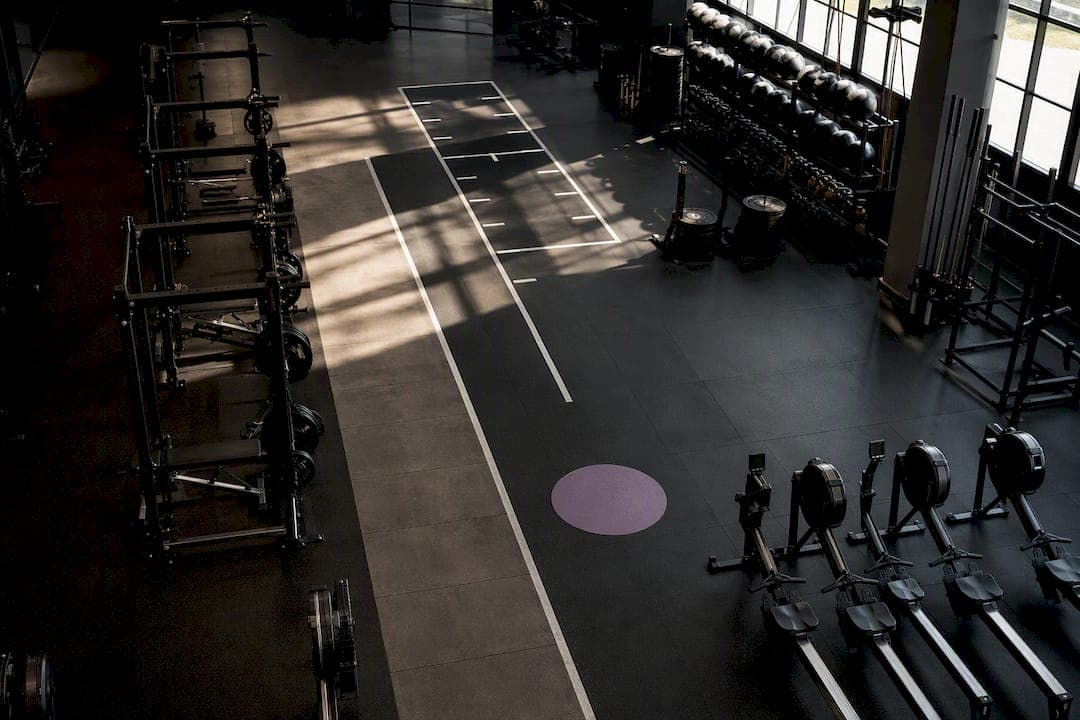
Set your class cap at the smallest of three numbers: usable floor space divided by square feet per person, your equipment station count, and your instructor ratio limit. Everything else, pricing tiers, waitlists, no-show policies, comes before you spend money adding capacity.
TL;DR:
- Set your class cap based on the smallest of usable floor space, equipment stations, or instructor-to-participant ratio, not on guesses or averages.
- Prioritize equipment capacity and instructor ratio limits that directly constrain class size, especially in formats like spin and Olympic lifting.
- Use attendance and waitlist data over 3 to 12 weeks to identify genuine demand, adjusting capacity or scheduling accordingly rather than relying on intuition.
- To reduce peak-hour crowding, implement off-peak pricing, stagger start times, and reserve higher-quality instructor slots for less busy hours instead of building new rooms.
- Employ automated reservation, attendance tracking, and waitlist features to ensure capacity limits are enforced and to gain accurate, real-time data on utilization.
Table of Contents
- What Goes Into Class Capacity Planning
- How To Set the Right Cap by Class Format
- Auditing Attendance to Find Peaks and Dead Zones
- Shrinking Peak-Hour Pressure Without Adding Rooms
- Policies and Software That Make Capacity Planning Actually Work
- Tracking Capacity KPIs So the Work Doesn't Stall
- Why I'd Rather Under-Cap Than Over-Promise
- Put Capacity Data on Autopilot With VO2WOD
- Sources
- FAQ
What Goes Into Class Capacity Planning
Most gyms set caps by guessing what feels right, then wonder why Tuesday's 6 p.m. class turns people away while Thursday's 5 p.m. slot has three athletes rattling around a room built for twenty. Real class capacity planning starts with three hard constraints, and your cap is whichever one is smallest, not an average of the three.
Usable floor space. Measure the actual training area, not the whole room, subtracting racks, mirrors, and walk lanes. Functional training formats generally need more like 30–40 square feet per athlete once you account for barbell paths and box jumps; yoga can run tighter at 15–20 square feet; spin is capped by the bikes themselves, not the floor. The cap-setting math that actually protects class quality treats floor space as one input among three, never the whole answer.
Equipment stations. If your format rotates through stations, rowers, bikes, squat racks, that station count is often the real ceiling. Twelve rowers means twelve people, full stop, no matter how much open floor you have left.
Instructor ratio. Technical lifting cues, mobility corrections, and injury-prone populations all tighten this number well below what space or equipment would otherwise allow.
Once you know your cap, calculate your break-even headcount: divide the fully loaded cost of the slot (coach wage plus a share of rent and overhead) by your per-visit class value. A $45 coach rate plus $15 in overhead on a class where each visit is worth $12 in average revenue needs five attendees just to break even.
- Measure actual usable square footage, not room dimensions
- Count fixed equipment stations per format
- Confirm your instructor's safe coaching ratio for that specific class type
- Calculate fully loaded slot cost before setting any cap
Pro Tip: Run the break-even math on your worst-attended slot first. If it's not clearing break-even at your current cap, no scheduling trick will save it, only a smaller cap, a cheaper slot, or cutting it.
How To Set the Right Cap by Class Format
Cap ranges vary enormously by format, and the limiting factor shifts too. A spin class caps at bike count, always. A functional strength class caps at floor space until group size crosses roughly 16 people, at which point instructor attention becomes the real limit and you need a second coach. Yoga and mobility work can run larger groups safely because the coaching demand per person is lower.
| Format | Typical cap range | Primary limiting factor |
|---|---|---|
| Functional strength/HIIT | 12–20 | Floor space, then instructor ratio above 16 |
| Spin/cycle | Equal to bike count | Equipment stations |
| Yoga/mobility | 20–30 | Floor space |
| Olympic lifting technique | 6–10 | Instructor ratio |
| Beginner/onboarding | 6–10 | Instructor ratio, intentionally kept low |
Beginner classes and specialty workshops are the exception to "bigger is more efficient." A smaller cap there is a feature, not a compromise. New members who get individual coaching attention in week one convert to long-term members at a much higher rate than those lost in a crowded room.
Watch for these red flags that your cap is set wrong, regardless of what the math says on paper:
- Repeated near-miss safety incidents during the same class or format
- A specific instructor consistently reporting exhaustion or burnout after that slot
- Member complaints clustering around one time slot rather than spread evenly
- Coaches quietly capping the class themselves below the official number
Auditing Attendance to Find Peaks and Dead Zones
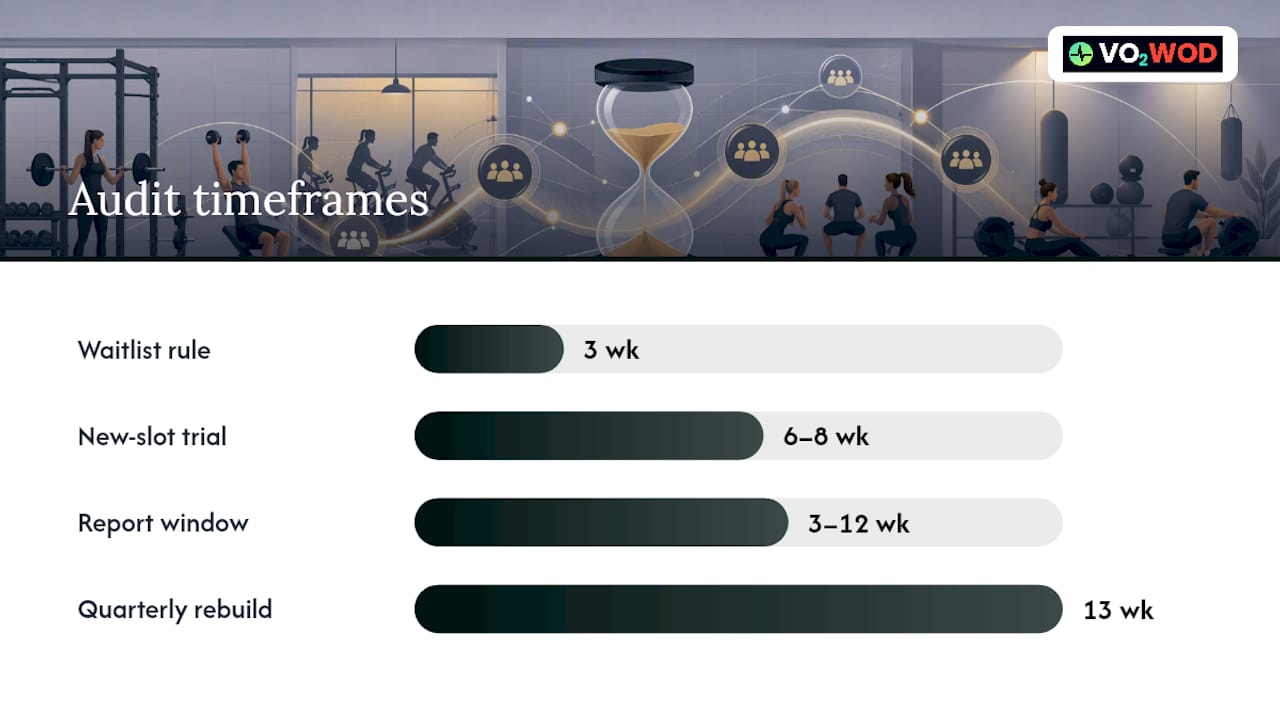
Pull three reports before touching your schedule: attendance by class and time slot, attendance by instructor, and waitlist frequency by slot. Run this over a 3 to 12 week window, single weeks lie, holidays and weather skew numbers, and a full quarter smooths that out.
- Apply the 3 week waitlist rule. If a class waitlists consistently for three straight weeks, that is real, sustained demand, not a fluke, and it justifies adding a duplicate session or bumping the cap.
- Give new slots 6 to 8 weeks before judging them. A brand-new 5:30 a.m. class needs time to build a following. Killing it after two weeks measures the launch, not the demand.
- Sort every existing slot into a fill-rate bracket. Utilization data reviewed on a rolling basis and rebuilt quarterly can lift class utilization 20–40% without adding a single class or instructor hour.
- Write one quarterly report with one recommendation. Not five. Pick the single highest-impact change, projected fill rate gain, and make it.
70–80% is healthy and sustainable.
Pro Tip: Track attendance by instructor separately from attendance by time slot. Sometimes a "dead" 7 p.m. class isn't a bad time, it's a coach who isn't drawing a following, and swapping instructors fixes what a schedule change never would.
Shrinking Peak-Hour Pressure Without Adding Rooms
Crowding at 6 p.m. is almost never a total capacity problem, it's a clustering problem. Everyone wants the same hour, and redistributing that demand with pricing and programming is faster and far cheaper than building out another room.
Test an off-peak membership tier, a modest discount for members who commit to classes before 9 a.m. or after 7:30 p.m. Even a 10–15% price difference shifts enough volume to matter. Put your most popular coach on an off-peak slot deliberately; attendance often follows the instructor more than the time.
Reservations versus drop-in access is its own lever. Reservation-only slots create reliable headcounts and turn your waitlist into a genuine demand signal you can act on. Pure drop-in access is more flexible for members but gives you no early warning before a class overflows.
- Rezone equipment so bottleneck stations sit farther from entry points, reducing perceived crowding even at the same headcount
- Stagger start times by five minutes between adjacent rooms to smooth locker room and check-in congestion
- Publish off-peak class perks (smaller groups, more coaching attention) as a selling point, not an afterthought
Policies and Software That Make Capacity Planning Actually Work
A cap only matters if the people who book actually show up. Set a late-cancel window of 4 to 6 hours before class start, tightening it too far frustrates members with legitimate emergencies, loosening it past that erases the deterrent. Pair it with a clear no-show consequence, a fee or a strike system, and give members with clean attendance records priority booking on high-demand slots. Managing this booked-but-no-show gap directly usually improves reliability more than any amount of extra capacity would.
On the software side, prioritize four features: integrated reservations with automatic waitlisting, attendance reporting broken out by instructor and time slot, station-level equipment inventory tracking, and wearable integration for real attendance verification, not just a checked box at the door.
Manual spreadsheets can tell you who signed up. They can't tell you who actually trained, how hard, or whether your 6 p.m. instructor is quietly burning out. That gap is exactly where automated attendance and heart rate data earn their keep.
VO2WOD's real-time monitoring and automatic scoring close that gap by capturing actual effort data instead of relying on manual entry, while free data migration and a complimentary first month remove the usual switching friction gym owners dread.
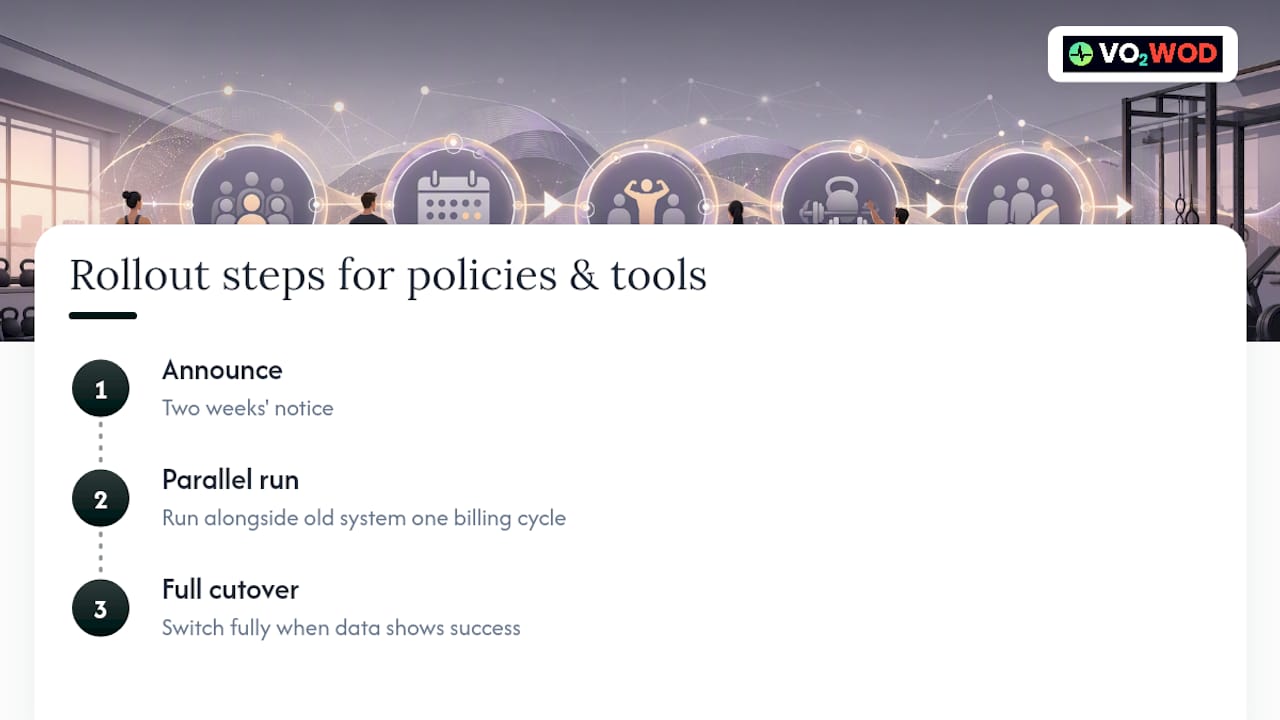
Roll out any new policy or tool in three steps: announce it two weeks ahead, run it in parallel with your old system for one billing cycle, then fully cut over once the data confirms it's working.
Tracking Capacity KPIs So the Work Doesn't Stall
Four numbers deserve a permanent spot on your dashboard: fill rate (attendees divided by cap), break-even headcount per slot, average waitlist length, and instructor utilization (classes taught against available coaching hours). A fifth, the link between schedule changes and member churn, takes longer to show up but matters more than any of the others.
Set a review cadence and stick to it. Check the weekly ops dashboard every Monday for anomalies, run a full quarterly schedule review against your 3 to 12 week attendance data, and revisit everything again each season since summer and January attendance patterns rarely match.
- Fill rate = attendees ÷ class cap, tracked weekly per slot
- Break-even headcount = fully loaded slot cost ÷ per-visit class value
- Waitlist length averaged over a rolling 3 week window
- Instructor utilization = classes taught ÷ available coaching hours
Measure ROI by connecting specific schedule changes to retention and revenue per square foot, not just attendance counts. A slot that adds five members but pushes your best coach into six back-to-back classes a week is not a win once you factor in burnout and eventual turnover.
Why I'd Rather Under-Cap Than Over-Promise
The instinct to build generous, optimistic grids, big caps, packed schedules, feels productive but backfires constantly.
Two things to do this week: pull your last eight weeks of attendance data by slot, and run the break-even math on your three worst performers. If a slot doesn't clear break-even and hasn't waitlisted once in three weeks, it's not a scheduling problem. It's a cut.
— Marcus
Put Capacity Data on Autopilot With VO2WOD
Everything in this guide depends on having real attendance and effort data, not guesses from a sign-in sheet. The platform gives functional fitness gyms the reservation and waitlist system, station-level inventory tracking, and instructor-by-time-slot attendance reporting to run this playbook without a spreadsheet in sight. Wearable integration means the fill-rate and utilization numbers come from actual heart rate and scoring data, not manual entry someone forgot to update.

Switching over doesn't mean starting from zero. VO2WOD includes free data migration and one month of complimentary service with dedicated support throughout the transition, so your historical attendance data comes with you instead of getting lost in the switch. If you're comparing platforms, see how VO2WOD stacks up against other functional fitness gym software options and book a walkthrough to see the attendance dashboard in action.
Sources
For the deeper math behind these numbers, see the cap-setting formula, the studio capacity calculator for revenue modeling, and timetable design guidance for fill-rate benchmarks.
- Class Schedule Optimization: Demand Analysis & Utilization Strategies for Gyms
- Gym class timetable design that fills classes (2026)
- Class Capacity Optimization: The Cap-Setting Math That Fills Rooms and Protects Quality — Zatrovo Blog
FAQ
What Is a Good Fill Rate for Gym Classes?
Aim for 65–80% of capacity at peak hours; slots consistently below 50% usually aren't covering wages and should be pruned or restructured.
How Do I Calculate Class Capacity?
Take the smallest of three numbers: usable floor space divided by square feet per participant, your equipment station count, and your safe instructor-to-participant ratio.
When Should I Add a Second Instructor to a Class?
Most functional strength formats need a second coach once headcount passes roughly 16 participants, since coaching quality and safety attention drop sharply beyond that.
How Long Should I Test a New Class Time Before Cutting It?
Give a new slot 6 to 8 weeks before judging it, and treat three consecutive weeks of waitlisting as a signal to add capacity rather than cut it.
Can Software Actually Reduce No-Shows?
Yes, platforms like VO2WOD pair reservation and waitlist automation with attendance data, making late-cancel policies and no-show tracking enforceable instead of theoretical.