
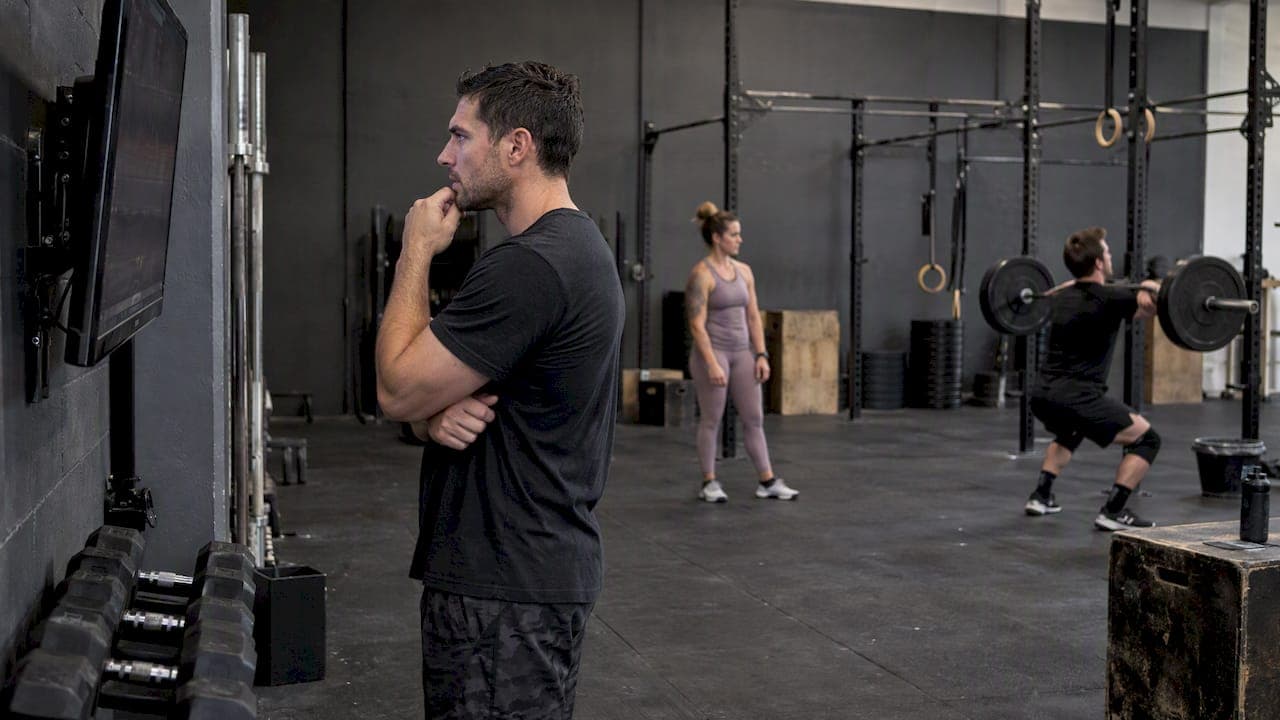
Automatic workout scoring means using live heart-rate data and workout structure to calculate a member's performance in real time, without a coach typing results into a whiteboard or app afterward. The approach that works best combines heart-rate intensity with normalized workout-output scoring, so an AMRAP and a time-capped workout can be compared fairly. Platforms like VO2WOD build this directly into gym management software rather than treating it as a bolt-on feature.
TL;DR:
- Heart-rate sensors work best with chest straps during intense workouts, while wrist-based devices may lose accuracy during high-movement exercises.
- Combining multiple scoring models, such as rep-rate, normalized AMRAP/TTC, and heart-rate effort, provides a more balanced performance evaluation.
- A successful rollout involves small pilots, staff training, clear data collection consent, and ongoing quality checks before full implementation.
- Automatic scoring systems handle mixed-format workouts and sensor dropout more reliably when rule-based validation algorithms are used.
- Member engagement improves through post-class summaries, leaderboards, and progress tracking, encouraging repeat visits and retention.
Table of Contents
- How automatic workout scoring works: data pipeline and real-time flow
- Scoring models: rep-rate, AMRAP and TTC normalization, and intensity weighting
- Hardware and data-quality decisions: wearables, sensors, and reliability
- Integration and workflows: coach dashboards, member outputs, and onboarding
- Why VO2WOD is positioned to deliver automatic scoring for functional-fitness gyms
- Accuracy and validation: known limits and a practical verification plan
- Implementation checklist: pilot to gym-wide rollout
- Automation should augment coaching, not replace it
- Try automatic workout scoring with VO2WOD
- FAQ
- Sources
How automatic workout scoring works: data pipeline and real-time flow
Automatic scoring depends on a handful of inputs working together: heart-rate data from a wearable, the workout's structure (time cap, rounds, rep scheme), rep or round counts as the athlete moves through the workout, and sometimes supplementary sensors for specific movements. The system captures that data continuously, filters out noise and calibrates it against the athlete's profile, maps it to a scoring model, then displays and records the result.
- Heart-rate and wearable data establish intensity in real time.
- Workout metadata (format, time cap, target reps) defines what "complete" and "score" mean for that session.
- Rep or round counts, entered manually or detected automatically, anchor the output number.
- Optional sensors, like linear position transducers or cameras, add detail for strength-biased movements.
The harder question is validation: a deterministic, rule-based system checks each rep against a defined standard (depth, lockout, timing), while a learned-score model infers results from patterns in data. The KD-Judge framework takes the rule-based route, converting movement rulebooks into machine-readable rules for transparent, rep-level validation on edge devices rather than relying on an opaque model's guess.
Scoring models: rep-rate, AMRAP and TTC normalization, and intensity weighting
Picking a scoring model depends on the workout format, and most gyms end up using more than one.
- Rep-rate scoring (reps completed per minute) works well for steady, cyclical workouts where pacing matters more than a single finish time.
- AMRAP and time-capped (TTC) normalization converts different formats into a shared scale, often using a repetition completion rate, so a 20-minute AMRAP and a 12-minute time cap can be ranked against each other. The Frontiers review on quantifying HIFT performance describes this kind of conversion as a practical way to compare different workout formats fairly.
- Intensity weighting folds heart-rate zones or percent of max heart rate into the final score, so two athletes with the same rep count but different effort levels don't get treated as equals.
Blending these models gives coaches a number that reflects both output and effort, which matters more for member feedback than raw reps alone.
Hardware and data-quality decisions: wearables, sensors, and reliability
Hardware choice determines whether live scoring is trustworthy or just noisy. Chest straps generally produce steadier heart-rate readings during high-intensity, high-movement work, while wrist-based optical sensors are easier to onboard but can lose accuracy during barbell work, burpees, or anything with wrist flexion. Linear position transducers and accelerometers add value for barbell velocity tracking but are often unnecessary for bodyweight-dominant classes.
- Chest straps hold up better than optical sensors during high-intensity interval work.
- LPTs are worth the investment for strength-focused programming, not general conditioning classes.
- Network stability and edge processing matter: a dropped connection mid-class breaks the live feed, not just the final score.
- Member consent and clear data-handling practices should be settled before rollout, not after a complaint.
Pro Tip: Pilot new hardware with your most engaged members first, since they're the most likely to flag a discrepancy before it becomes a pattern.
Integration and workflows: coach dashboards, member outputs, and onboarding
A live coach dashboard should show per-athlete heart rate, zone targets, and alerts when someone is under-working or pushing into an unsafe range. On the member side, the payoff is post-class summaries, leaderboards, and personal-record tracking that give people a reason to come back.
- Coaches need real-time visibility into who's below target intensity and who's redlining.
- Members want a post-class summary that shows effort and output side by side, not just a final time.
- Leaderboards and PR tracking turn a single workout into a reason for a return visit, helping clubs boost retention with group workout challenges.
Onboarding runs smoother with a short checklist: map existing member profiles into the new system, import historical personal records, run a pilot with a few classes before a full switch, and train staff on reading the dashboard before members start asking questions about it.
Why VO2WOD is positioned to deliver automatic scoring for functional-fitness gyms
We built VO2WOD specifically for functional-fitness gyms that need to live in-class biometrics and automatic scoring without stitching together separate apps for heart rate, scheduling, and member records. Our platform tracks heart rate during class, calculates workout scores automatically, and supports wearable integration with Garmin, Apple, Fitbit, and Samsung devices, so athletes don't need to buy a new device just to show up.
- Live heart-rate monitoring and automatic scoring run inside the same platform as class scheduling and billing.
- Wearable integration covers the major consumer devices members already own.
- Free data migration and one month of complimentary service remove the usual cost of switching systems.
- A dedicated support team handles onboarding so the transition doesn't fall on a single staff member.
Those pieces map directly onto the rollout steps above: migration covers the historical-data step, the trial month covers the pilot, and support covers staff training.
Accuracy and validation: known limits and a practical verification plan
No automatic scoring system handles every movement perfectly. Typical failure points include high-variety workouts that mix barbell, gymnastics, and monostructural work in one session, sensor dropout during sweaty or high-motion segments, and optical heart-rate noise during max-effort intervals.
- Mixed-modal workouts stress sensors more than single-movement formats.
- Dropout tends to spike during the highest-intensity minutes, which is exactly when accuracy matters most.
- Optical sensors are more prone to noise than chest straps under heavy arm movement.
The KD-Judge framework demonstrates that rule-based, deterministic rep validation can run faster than real time on edge devices, cutting the reliance on opaque learned-score predictions. That kind of transparent logic makes it easier to audit a disagreement between the system and a human judge. A practical check: sample a handful of classes, compare automated scores against a coach's manual count, log every discrepancy, and adjust either the rule set or sensor placement based on where the gaps show up.
Implementation checklist: pilot to gym-wide rollout
Moving from evaluation to full production works best as a sequence rather than an all-at-once switch.
- Define what success looks like for the pilot and pick the scoring model (rep-rate, normalized AMRAP/TTC, or intensity-weighted) that fits your class format.
- Run the pilot with a small group, comparing automated scores against coach-verified results and collecting member feedback.
- Adjust sensor placement or scoring rules based on pilot discrepancies before expanding.
- Plan full migration, staff training, and a clear member opt-in process for heart-rate data collection.
- Build ongoing quality checks into regular operations, not just the launch week.
Pro Tip: Keep the pilot small enough that one coach can personally review every discrepancy, that's usually the fastest way to find a sensor or rule problem.
Automation should augment coaching, not replace it
Automatic scoring takes the manual math off a coach's plate, but it doesn't replace the judgment that catches a bad rep or a member pushing through pain. The real risk isn't inaccurate numbers, it's using those numbers as a verdict instead of a conversation starter. Transparency about what's being measured, and genuine consent around heart-rate data, is what keeps members trusting the system rather than gaming it.
— Marcus
Try automatic workout scoring with VO2WOD
Live heart-rate monitoring, automatic scoring, and wearable support work together inside VO2WOD so coaches see effort as it happens instead of reconstructing it after class.

- Free data migration removes the cost of moving member records and history.
- A trial period gives a real pilot window before any commitment.
- A dedicated support team handles setup instead of leaving it to your front desk staff.
If you're comparing this against Wodify, PushPress, Mindbody, Zen Planner, Gymdesk, or Kicksite, the practical difference is fewer separate tools to manage. See what switching looks like on our why-change page, or check Vo2hub hardware options if you're starting from scratch on sensors.
FAQ
What counts as automatic workout scoring in a gym setting?
Automatic workout scoring calculates a member's class performance from live data, typically heart rate combined with rep or round counts, rather than a coach recording it by hand. The score reflects both output and effort when heart-rate intensity is factored into the final number.
Is heart-rate-based scoring more accurate than manual judging?
Heart-rate data removes guesswork around intensity that manual judging can't capture, since a coach watching a room can't track every athlete's effort level at once. Rep-level accuracy still depends on rule-based validation like the approach in KD-Judge, which checks movement standards directly rather than inferring them.
What hardware do I need to start automatic scoring?
A wearable with heart-rate tracking, either a chest strap or optical wrist sensor, covers most class formats, with chest straps holding up better during high-intensity work. Barbell-heavy programming may benefit from additional sensors like linear position transducers, but they're not necessary for general conditioning classes.
How does automatic scoring affect member retention?
Post-class summaries, leaderboards, and personal-record tracking give members tangible proof of progress beyond a single workout time, which tends to support repeat visits. Group heart-rate monitoring products like Polar Club are built around this same idea: making effort visible drives engagement.
Does switching to automatic scoring require migrating old data?
Most platforms, including VO2WOD, offer free data migration so historical personal records and member profiles move over without manual re-entry. A short pilot period, often covered by a complimentary trial month, lets staff and members adjust before a full gym-wide switch.
Sources
- Polar Club | Group heart rate tracking app that drives engagement and motivation | Polar USA
- Frontiers review on quantifying HIFT workout performance
- KD-Judge: A knowledge-driven automated judge framework for functional fitness movements on edge devices